Q2
Q2
 QIDI Box
 Plus 4
 Q1 Pro
 X-Max 3


Why Choose QIDI 3D Printers?


QIDI builds enclosed FDM 3D printers that pair a 370 °C hotend and a direct-drive extruder with an actively heated 65 °C chamber, starting at $499. That combination is what lets a desktop machine run ABS, ASA, PC, and Nylon reliably, and it is uncommon in this price bracket. The current lineup runs from $349 to $1,049.
Rather than list adjectives, this page states what the machines are specified to do, where the specifications are genuinely unusual, and where they are not. Compare them against anything else you're considering and decide for yourself.

The Current QIDI Lineup at a Glance
| Model | Price | Build volume | Max speed / acceleration | Chamber |
|---|---|---|---|---|
| Q2C | $349 ($529 combo) | 270 × 270 × 256 mm | 600 mm/s, 20,000 mm/s² | Enclosed, flame-retardant, not actively heated |
| Q2 | $499 ($649 combo) | 270 × 270 × 256 mm | 600 mm/s, 20,000 mm/s² | 65 °C actively heated |
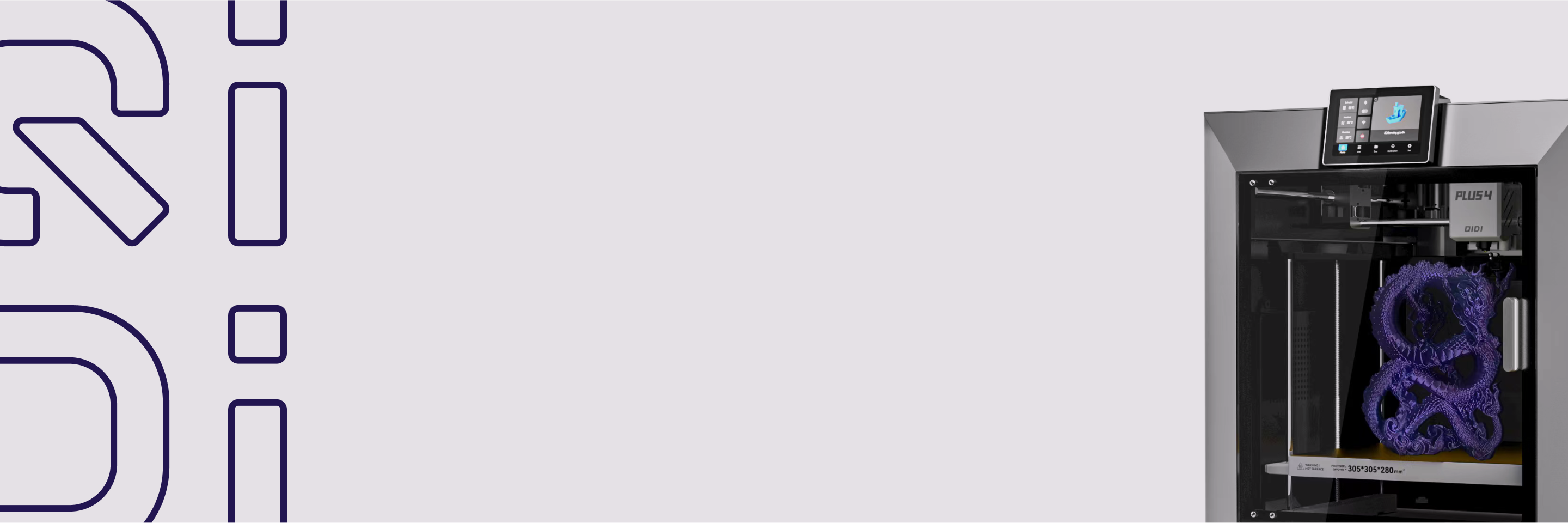
| Plus 4 | $699 ($849 combo) | 305 × 305 × 280 mm | 600 mm/s | 65 °C actively heated |
| Max4 | $1,049 ($1,199 combo) | 390 × 390 × 340 mm | 800 mm/s, 30,000 mm/s² | 65 °C actively heated |
All four share a 370 °C hotend, a direct-drive extruder, a 120 °C heated bed, and firmware based on an open-source Klipper fork. A fuller breakdown lives in our model-by-model comparison.
1. An Actively Heated Chamber, Not Just an Enclosure
An actively heated chamber is a build volume held at a set temperature by a heater, as opposed to a passive enclosure that simply traps whatever heat the bed gives off. On the Q2, Plus 4, and Max4 that setpoint is 65 °C.
This distinction is the practical reason a machine can or cannot print engineering plastics. ABS, ASA, PC, and Nylon shrink as they cool. If the air around a tall part is cool, the lower layers contract while the upper ones are still hot, and the part either lifts off the plate or splits along a layer line halfway up. Holding the chamber near the polymer's softening range slows that gradient — the mechanism is explained in detail in how chamber heating prevents Nylon cracking, and it follows directly from where each material's glass transition sits.
Be aware of the exception: the Q2C is enclosed with a flame-retardant shell but has no chamber heater. It is the right choice if you print mostly PLA and PETG and want the enclosure for dust, noise, and draft control. If ABS or Nylon is on your list, step up to the Q2.
2. A 370 °C Hotend Across the Line
Hotend ceiling decides which filaments a printer can physically melt. A 260 °C hotend covers PLA and PETG. 370 °C covers PC, Nylon, PA-CF, PPS-CF, and the higher-temperature composites, which is why every machine in the current lineup carries one — the $349 Q2C included.
Paired with a 120 °C bed and a direct-drive extruder, that means the same machine handles a flexible TPU phone case and a carbon-fibre-filled bracket without a hardware swap. Direct drive matters here specifically: the short filament path between gear and nozzle is what makes soft filaments feed reliably, which Bowden setups struggle with.
Filament choice is part of the same system — QIDI's own filament range ships with tested slicer profiles, including PET-CF for stiff, dimensionally stable parts.

2b. Speed You Can Actually Use
Headline speeds are easy to publish and hard to reach. The current machines are specified at 600 mm/s and 20,000 mm/s², with the Max4 at 800 mm/s and 30,000 mm/s². What makes those numbers usable rather than theoretical is the combination of a rigid CoreXY motion system and Klipper's input shaping, which cancels the frame resonance that would otherwise show up as ringing on every corner.
To be straightforward about it: average speed on a detailed model will be a fraction of the peak figure, on any printer from any brand. Peak speed matters most on large, simple parts and on infill.
3. Open-Source Firmware and a Slicer You Can Leave
QIDI machines run a fork of Klipper, the open-source firmware project. In practice this means three things:
- Printer configuration lives in a readable text file, not a locked binary. You can inspect it, adjust it, and revert it.
- The wider Klipper ecosystem — macros, community tuning guides, mainline documentation — applies to your machine.
- QIDI Slicer is based on the open PrusaSlicer/OrcaSlicer lineage, so profiles and workflows are portable rather than proprietary.
Firmware releases and slicer downloads are published on the software and firmware page. Documentation and configuration references are on the QIDI technology wiki.
4. Support, Warranty, and Parts
A 3D printer is a machine with consumables, so the support question is not "will it break" but "how quickly can I get it running again."
What the support team covers
QIDI's support team handles setup problems, print-quality diagnosis, and replacement parts. The terms — coverage period, what counts as a wear item, how to open a case — are written out on the warranty and after-sales support page rather than left vague here.
What you can fix yourself
Nozzles, hotends, build sheets, and belts are user-serviceable, and the wiki documents the procedures. Most quality issues never need a support ticket at all — our troubleshooting guide covers the fifteen most common failures and their fixes.

5. Community and Feedback
Firmware forks and slicer profiles get better when users report what breaks. QIDI runs a Discord community where owners share profiles, print settings, and modifications, and where bug reports reach the people who maintain the firmware.
This is also where the honest limits of a product get discussed. If you want to know how a specific filament behaves on a specific machine before buying, that is a faster answer than any product page will give you.

Where a QIDI Printer May Not Be the Right Fit
Being specific about this is more useful than claiming universal suitability:
- If you only ever print PLA figurines, you are paying for a heated chamber and a 370 °C hotend you will never use. An open-frame machine will do the job for less.
- If you need parts larger than 390 × 390 × 340 mm in one piece, no machine in this lineup fits; you need a large-format industrial printer or a design that splits.
- If you need certified process control — traceable material lots, validated parameters, documented repeatability — that is an industrial-machine requirement, not a desktop one.
- If you want resin-level surface detail on small models, FDM is the wrong process regardless of brand. See our filament vs resin comparison.
Frequently Asked Questions
Which QIDI 3D printer should a beginner buy?
The Q2C at $349 if you expect to print mainly PLA and PETG, or the Q2 at $499 if you want the actively heated chamber for ABS and Nylon. Both are the same size and speed; the chamber heater is the only major difference.
Do all QIDI 3D printers have a heated chamber?
No. The Q2, Plus 4, and Max4 have an actively heated 65 °C chamber. The Q2C is enclosed with a flame-retardant shell but has no chamber heater. All four have the 370 °C hotend and the 120 °C bed.
Can QIDI printers print carbon-fibre filament?
Yes. The 370 °C hotend and direct-drive extruder handle PA-CF, PET-CF, and PPS-CF. Filled filaments are abrasive, so a hardened nozzle is required, and they must be dried before use.
Is QIDI firmware open source?
The firmware is a fork of Klipper, an open-source project, and the printer configuration is editable. The slicer descends from the open PrusaSlicer/OrcaSlicer line. Not every vendor-specific component is published, but the configuration layer users actually work with is open.
What is the largest QIDI 3D printer?
The Max4, with a 390 × 390 × 340 mm build volume, an 800 mm/s top speed, and 30,000 mm/s² acceleration, at $1,049.
Choosing Your Machine
The decision comes down to two questions. First: do you need an actively heated chamber, which means asking whether ABS, ASA, PC, or Nylon are on your list. Second: how large is the biggest part you cannot split? Those two answers point at one of the four machines in the current lineup almost immediately.
Everything else — speed figures, firmware openness, support terms — is worth checking, but it rarely changes which model you end up with. Compare the specifications against your actual parts, not against marketing copy, including ours.
Read More
- The Current QIDI Lineup at a Glance
- 1. An Actively Heated Chamber, Not Just an Enclosure
- 2. A 370 °C Hotend Across the Line
- 2b. Speed You Can Actually Use
- 3. Open-Source Firmware and a Slicer You Can Leave
- 4. Support, Warranty, and Parts
- What the support team covers
- What you can fix yourself
- 5. Community and Feedback
- Where a QIDI Printer May Not Be the Right Fit
- Frequently Asked Questions
- Which QIDI 3D printer should a beginner buy?
- Do all QIDI 3D printers have a heated chamber?
- Can QIDI printers print carbon-fibre filament?
- Is QIDI firmware open source?
- What is the largest QIDI 3D printer?
- Choosing Your Machine
- Read More
Recommended products