Q2
Q2
 QIDI Box
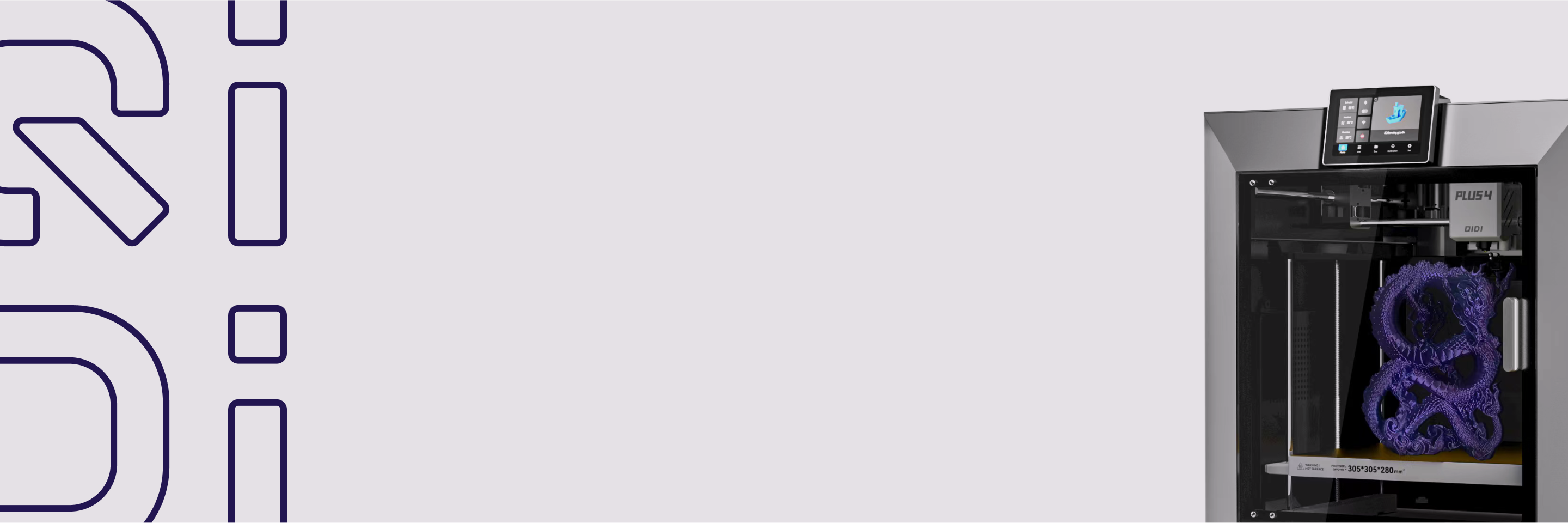
 Plus 4
 Q1 Pro
 X-Max 3


What Is a 3D Printing Farm?


A 3D printing farm is a production facility running many 3D printers under one centralised management system, typically 10 to 100 machines. A 25-machine farm built on QIDI hardware costs roughly $8,700 to $17,500 in printers, depending on the model. This guide covers what goes into one, what it costs to start, and what breaks first.
Print farms have grown from a few desktop machines in a garage into professional production hubs serving medical devices, consumer goods, spare parts and prototyping. What makes them work is not exotic hardware. It is identical machines, standardised profiles, and a workflow that assumes failures will happen.
What Is a 3D Printing Farm?
A 3D printing farm is a production facility housing multiple 3D printers under centralised management. It functions as a coordinated manufacturing system where many printers work simultaneously to produce parts and products. The defining characteristic is not the printer count but the management layer: a farm schedules jobs across machines, tracks utilisation, and treats any single printer as replaceable capacity rather than as an individual tool.
Core Features
- Centralised printer management
- Batch production capability
- Automated workflow systems
- Standardised quality control
- Continuous operation model
Scale Categories
- Small Farm: 10-30 printers
- Medium Farm: 31-60 printers
- Large Farm: 61-100+ printers
Production Types
- Mass customization
- Small-batch manufacturing
- Prototype development
- Spare parts production
This approach combines the flexibility of additive manufacturing with industrial-scale throughput, enabling efficient and scalable production without tooling.

What a Farm Costs to Start
Hardware is the number everyone asks about first, so start there. Below is the printer bill for a 25-machine farm across QIDI's current lineup. Combo pricing, which bundles accessories, is shown separately because at farm scale those bundles change the total materially.
| Model | Unit price | 25 machines | Build volume each | Heated chamber | Suits |
|---|---|---|---|---|---|
| Q2C | $349 | $8,725 | 270 × 270 × 256 mm | No — enclosed, not heated | PLA, PETG, TPU volume work |
| Q2 | $499 | $12,475 | 270 × 270 × 256 mm | Yes — 65 °C | Mixed jobs including ABS and ASA |
| Plus 4 | $699 | $17,475 | 305 × 305 × 280 mm | Yes — 65 °C | Larger parts, engineering plastics |
| Max4 | $1,049 | $26,225 | 390 × 390 × 340 mm | Yes — 65 °C | Large single-piece production |
The Q2C at $349 is the most economical farm base for PLA and PETG work, putting 25 machines at $8,725 and 467 litres of combined build volume. Its enclosure is flame-retardant but not actively heated, which is the trade-off: it is the right choice when your product mix is PLA, PETG and TPU, and the wrong one when customers order ABS or nylon. For a mixed-material farm, the Q2 at $499 adds a 65 °C heated chamber for $150 per machine, or $3,750 across 25 units.
Add roughly 25–40% on top of the hardware figure for the rest of the build: shelving, power distribution, ventilation, a management workstation, and an initial filament stock. That puts a realistic 25-machine Q2C farm somewhere near $11,000–$12,000 all in.
Key Components That Power a 3D Printing Farm
Three things must work together: reliable hardware, effective software, and the right infrastructure. Each does its own job to keep throughput steady and quality consistent.
Hardware for Production and Processing
Different kinds of versatile printers make up the heart of any printing operation. Fused filament fabrication (FDM) machines dominate because they are reliable, cheap to run, and use materials that store well. Stereolithography (SLA) printers offer finer detail using liquid resin and UV light, which suits precise small parts but adds a wash-and-cure step. Most farms also need post-processing equipment: cleaning stations, curing units, and finishing tools.
The single most valuable hardware decision at farm scale is standardising on one model. Identical machines mean one slicer profile, one spare parts inventory, one training procedure, and interchangeable build plates. A farm of 25 identical Q2C units is materially easier to run than 25 assorted printers of equivalent total value.
Software for Control and Design
Two software layers keep a farm running. Management software tracks print jobs, monitors printer state, and schedules production across machines. Design and preparation tools let teams model, modify and slice parts. Common tools include CAD packages for the modelling work and slicing software for turning models into machine instructions. Machines running Klipper firmware, as QIDI's current lineup does, are straightforward to monitor and control over a network, which is what makes centralised scheduling practical.
Infrastructure for Operation Support
Layout decides how well the rest works. Separate zones for printing, post-processing and material storage prevent cross-contamination and keep traffic away from running machines. Environmental control matters: a stable ambient temperature reduces warping on ABS and similar engineering plastics, and adequate ventilation manages fumes and particulates. Electrical capacity has to be planned deliberately, not discovered. Sum every machine's nameplate wattage, apply your local rate from the U.S. EIA electricity price tables, and you have both your circuit requirement and your monthly power budget. Our breakdown of 3D printer electricity cost per hour shows how to run that calculation for a single machine before multiplying.
Daily Operations in a 3D Printing Farm
File Verification and Print Setup
The workflow begins with verification of CAD files to confirm design integrity and manufacturability. Technicians then optimise print parameters in the slicer against material properties and quality requirements. Before production, the system generates a scheduling plan that maximises printer utilisation, material requirements are calculated, and build plates are cleaned and calibrated.
Real-time Print Monitoring and Control
G-code files are distributed to their designated printers. The opening phase demands attention to first-layer adhesion, which is the single largest predictor of print success. The central management system records printer utilisation and performance metrics throughout.
Surface Treatment and Quality Inspection
After completion, technicians handle part removal, support elimination and surface finishing. Quality staff conduct dimensional checks and visual inspection, followed by functional testing where the part requires it. The final stage is packaging and labelling to protect product integrity in transit.
Production Records and Traceability
Detailed records are the backbone of quality assurance. The system archives print parameters, inspection data and test results in a central database. Each product receives a traceability number that links back to its full production history. Non-conforming items are analysed and documented so the same failure does not recur.

Commercial Applications of 3D Printing Farms
Rapid Prototyping for Product Development
Engineering teams use farms to compress design cycles. Within 24–48 hours, designers can evaluate multiple iterations of a complex component, testing several design variants in parallel rather than in sequence. That feedback loop lets companies settle a design before committing to expensive tooling.
Medical and Dental Customization
Healthcare providers use farms to produce patient-specific devices and anatomical models. Dental laboratories produce large daily volumes of unique aligners; prosthetics workshops produce customised sockets and orthotic devices. Each item is tailored to individual measurements while production quality stays consistent across volume.
On-Demand Manufacturing
Farms are well suited to runs of 50–5,000 units. This fits specialty automotive parts, architectural components and industrial spares. Companies can hold virtual inventory, producing components only when ordered, which removes warehousing cost and obsolescence risk and lets them adjust volumes against real demand.
Business Benefits of Large-Scale 3D Printing Operations
Scalable Production Capacity
A well-organised farm handles multiple client projects at once, with throughput scaling close to linearly per added printer. Expanding from 10 to 100 machines happens inside the same workflow system, holding quality steady while per-unit cost falls. Capacity can be redirected between product lines within hours rather than weeks.
High Material Utilisation
The modular economics compare well against traditional setups. Initial investment can be a fraction of injection-molding tooling while offering far more product flexibility. Material efficiency reaches high levels through optimised part orientation and minimal support structures, considerably better than subtractive methods that remove most of the stock.
Complex Geometry Capability
Farms unlock geometries that are impractical otherwise, including integrated assemblies that traditionally required several parts. Engineers can incorporate internal channels, lattice structures, and organic shapes that optimise both form and function.

Challenges and Considerations
Equipment Reliability
Most farms struggle with downtime and quality drift more than with any single dramatic failure. Preventive maintenance is what keeps utilisation up: check nozzles for wear on a schedule rather than on symptoms, keep rails lubricated, and retire consumables before they fail mid-job. Standardising on one model makes this dramatically cheaper, because one spare parts bin covers every machine.
Startup Costs
A 25-machine farm costs roughly $8,700 to $17,500 in printers. Using the Q2C at $349, 25 machines come to $8,725. Using the Q2 at $499, the same farm is $12,475 and every machine gains a 65 °C heated chamber. Using the Plus 4 at $699, it is $17,475 with a larger 305 × 305 × 280 mm platform per unit. A large-format Max4 farm at $1,049 per machine reaches $26,225, which only makes sense if your parts genuinely need 390 mm.
To manage the outlay, start with fewer machines and expand in blocks as utilisation justifies it. A ten-unit Q2C farm is $3,490, which is a far easier first commitment. Target around 65% capacity utilisation before adding hardware, and consider leasing to spread the initial cost.
Workforce Training
Running a farm requires skills in mechanics, materials and software. A reasonable ratio is one experienced technician per 20 machines. New staff typically need 80–120 hours of foundational training plus quarterly refreshers. Budget 5–7% annually for development and certification.

Frequently Asked Questions
How much does it cost to start a 3D printing farm?
For 25 machines, budget $8,725 with the Q2C at $349 each, $12,475 with the Q2 at $499, or $17,475 with the Plus 4 at $699. Add roughly 25–40% on top for racking, power, ventilation and initial filament stock. A ten-machine starter farm on Q2C hardware is $3,490 in printers.
How many printers make a print farm?
Ten is the usual threshold, because that is roughly where ad-hoc management stops working and centralised scheduling becomes necessary. Small farms run 10–30 machines, medium farms 31–60, and large farms 61 or more.
Which printer is best for a print farm?
Standardise on one model, and choose it by material mix. For PLA, PETG and TPU volume work the Q2C is the most cost-effective at $349. If jobs include ABS, ASA or nylon, the Q2 at $499 adds an actively heated 65 °C chamber. Move to the Plus 4 or Max4 only when part size requires it.
How profitable is a 3D printing farm?
Profitability tracks utilisation more than anything else. A farm running at 65% capacity with consistent order flow is a viable business; the same hardware at 20% utilisation is not. Model your revenue per printer-hour against filament, power, labour and maintenance before scaling. Our guide to earning money in 3D printing goes deeper on pricing.
How much space does a print farm need?
Plan for the printer footprint plus clearance for the door to open and for a technician to work, then add separate zones for post-processing and material storage. Racking machines vertically is standard practice, but leave airflow between shelves and keep ambient temperature stable.
Build a Successful 3D Printing Farm
A 3D printing farm is a group of advanced printers working under one management system to produce parts flexibly and at volume. A 25-machine farm starts around $8,700 in hardware and rises with model choice, and it succeeds on the unglamorous fundamentals: standardised machines, scheduled maintenance, trained staff, and at least 65% capacity utilisation. Get those right and the same floor can serve prototyping, spares and end-use production without changing a thing but the queue.
- What Is a 3D Printing Farm?
- Core Features
- Scale Categories
- Production Types
- What a Farm Costs to Start
- Key Components That Power a 3D Printing Farm
- Hardware for Production and Processing
- Software for Control and Design
- Infrastructure for Operation Support
- Daily Operations in a 3D Printing Farm
- File Verification and Print Setup
- Real-time Print Monitoring and Control
- Surface Treatment and Quality Inspection
- Production Records and Traceability
- Commercial Applications of 3D Printing Farms
- Rapid Prototyping for Product Development
- Medical and Dental Customization
- On-Demand Manufacturing
- Business Benefits of Large-Scale 3D Printing Operations
- Scalable Production Capacity
- High Material Utilisation
- Complex Geometry Capability
- Challenges and Considerations
- Equipment Reliability
- Startup Costs
- Workforce Training
- Frequently Asked Questions
- How much does it cost to start a 3D printing farm?
- How many printers make a print farm?
- Which printer is best for a print farm?
- How profitable is a 3D printing farm?
- How much space does a print farm need?
- Build a Successful 3D Printing Farm
Recommended products