Q2
Q2
 QIDI Box
 Plus 4
 Q1 Pro
 X-Max 3


All3DP Recognizes QIDI Tech Plus4 Top Pick in Latest 3D Printer Review

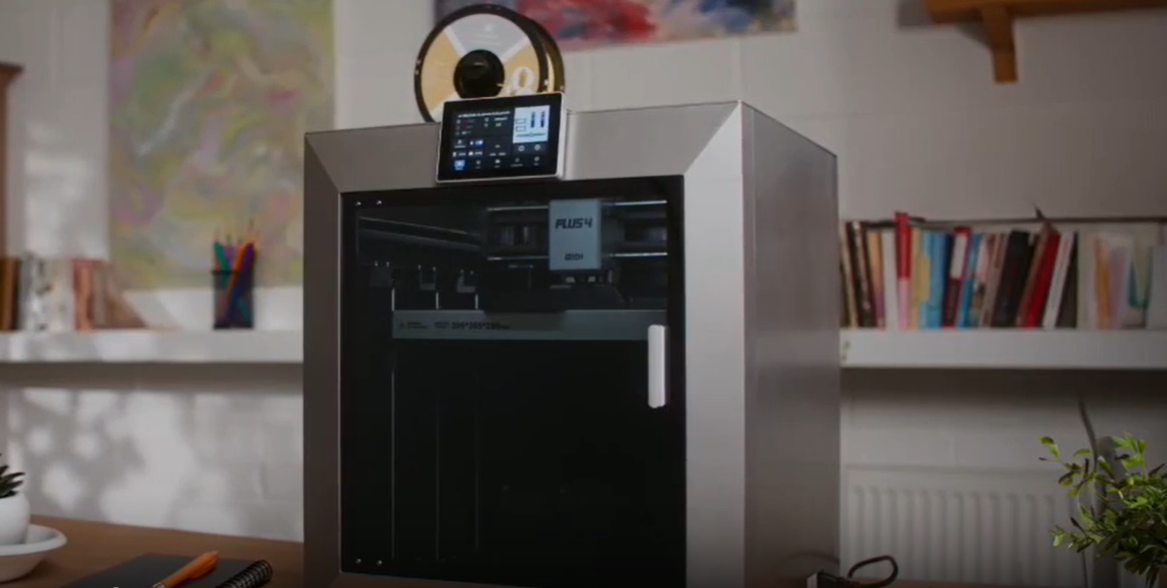
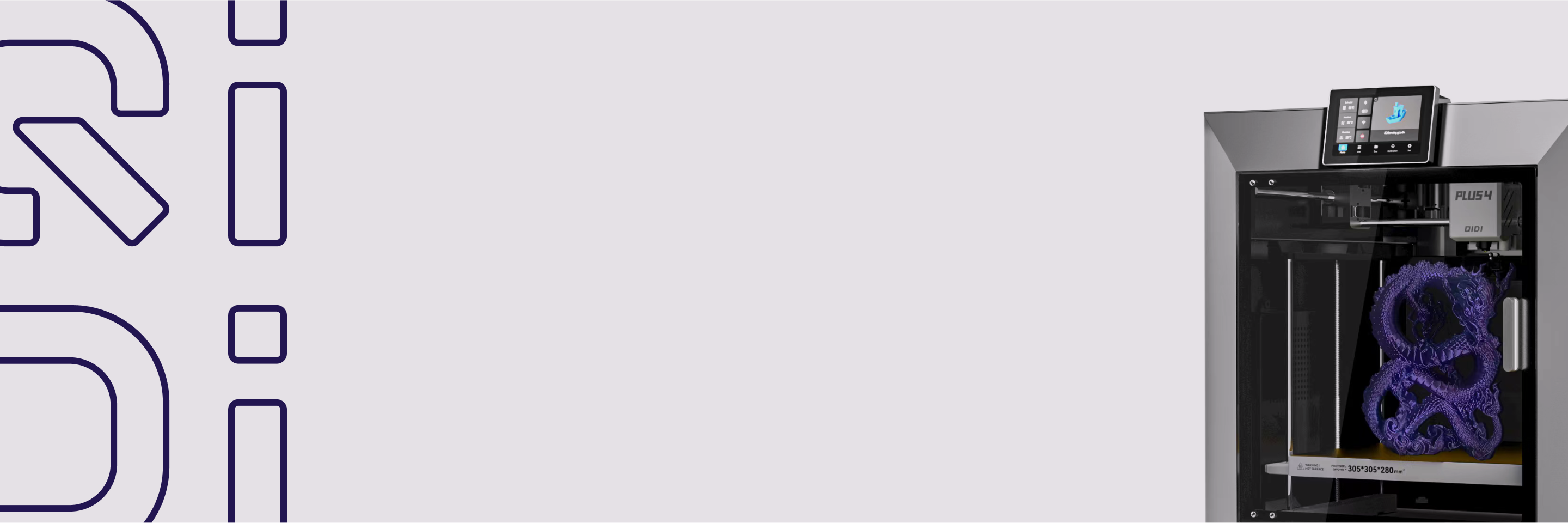
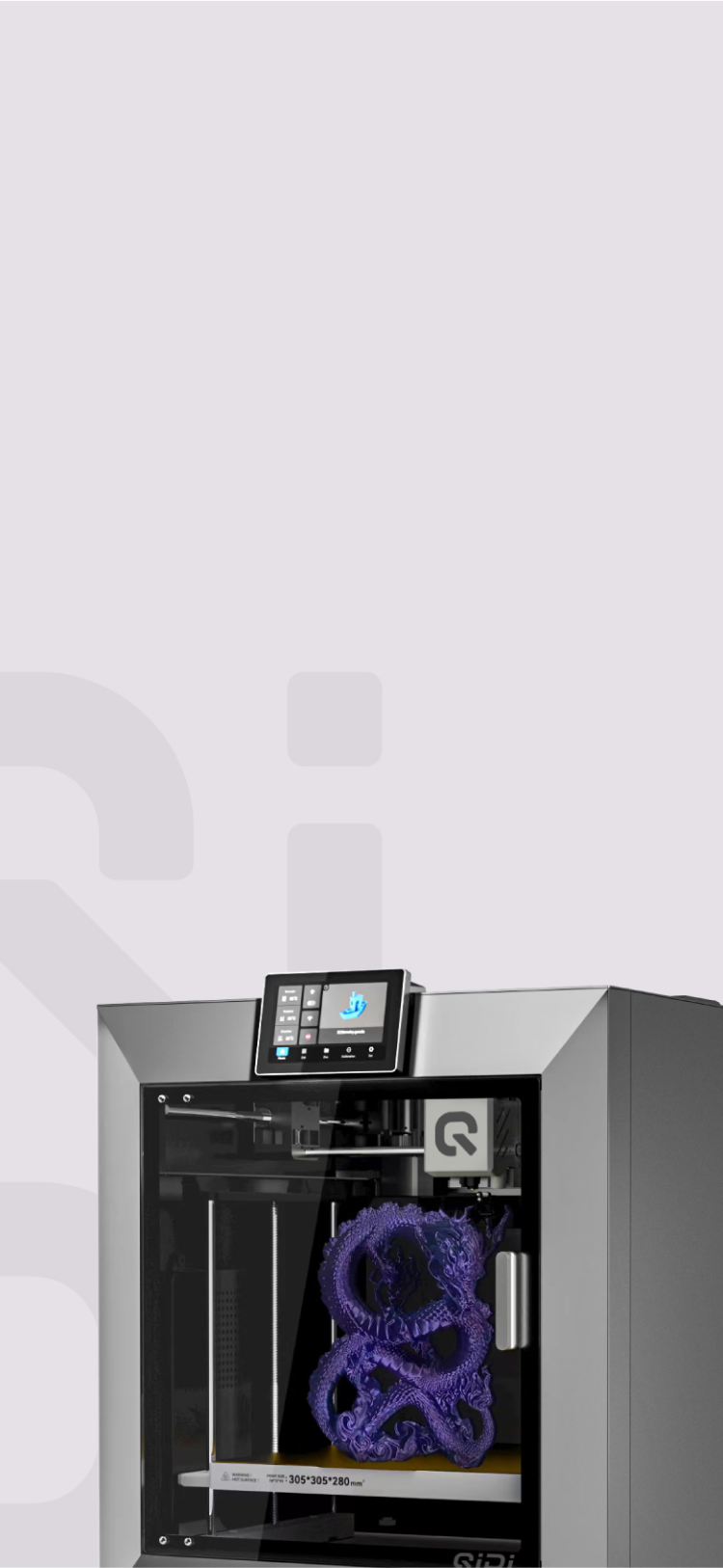
The QIDI Plus 4 is a $699 enclosed CoreXY FDM 3D printer with a 305×305×280 mm build volume, a 370°C hotend and a second-generation PTC chamber heater rated to 65°C. It has appeared in independent reviews and buyer's guides across the 3D printing press, including All3DP. This article sets the coverage aside and looks at what the machine's published specifications actually deliver.
QIDI Plus 4 Full Specifications
Every figure below comes from QIDI's own published technical specification sheet for the Plus 4, not from a review summary. Where a number has conditions attached, the conditions are stated.
| Specification | QIDI Plus 4 |
|---|---|
| Price (base configuration) | $699 |
| Build volume (W×D×H) | 305×305×280 mm (26.0 liters) |
| Motion system | CoreXY, 9 mm 1.5GT belt |
| X/Y axes | 10 mm high-hardness linear hollow steel shafts |
| Z axis | Dual independent lead screw motors |
| Max toolhead speed | 600 mm/s |
| Max acceleration | ≤20,000 mm/s² |
| Hotend max temperature | ≤370°C |
| Heated bed max temperature | ≤120°C, 6 mm aluminium substrate |
| Chamber heating | 2nd generation PTC heater, up to 65°C, independently controlled |
| Extruder | Direct drive, hardened steel gears |
| Nozzle | Bimetal, 0.4 mm standard (0.2 / 0.6 / 0.8 mm optional) |
| Build plate | Dual-sided textured PEI |
| Bed leveling | Hands-free automatic leveling |
| Filament detection | Tangle detection plus Hall-effect run-out sensor |
| Motion compensation | Input shaping, closed-loop control, power-loss recovery |
| Air handling | Chamber circulation fan with activated carbon filter |
| Camera | Low framerate, up to 1080P, timelapse supported |
| Display | 5-inch 800×480 touchscreen |
| Connectivity | 2.4 GHz Wi-Fi, Ethernet, USB |
| Storage | 32 GB eMMC plus USB 2.0 |
| Rated power | 450 W plus 400 W chamber heating |
| Supported filament | PLA, ABS, ASA, PETG, TPU, PA, PC, carbon/glass fibre reinforced polymers |
| Multi-colour | Compatible with QIDI Box |
| Machine size / weight | 505×487×550 mm, 27 kg net |
The combination worth noting is the third, fourth and tenth rows together: 370°C at the nozzle, 120°C at the bed and 65°C in the chamber, in a machine at $699. That set of three ceilings is what determines the material list, and it is the reason the Plus 4 is usually discussed as an engineering machine rather than a hobby one.

What the 65°C Heated Chamber Actually Changes
An actively heated chamber is an enclosure with its own heating element that raises and holds the air temperature around the print independently of the bed and hotend. The Plus 4 uses a second-generation PTC heater rated at 400 W and controlled up to 65°C. The mechanism is straightforward: thermoplastics contract as they cool, and the faster and more unevenly they cool, the more internal stress builds up between layers. Warping, corner lift and layer splitting are all symptoms of that stress.
Holding the chamber at an elevated temperature slows the cooling gradient across the whole part rather than just at the bed surface. The effect scales with part size and with how far the polymer's glass transition temperature sits above room temperature. PLA, with a glass transition commonly cited at 55–60°C, gains nothing from it and generally prints better with strong part cooling. ABS, at roughly 105°C, gains a great deal.
| Material | Nozzle temp | Benefit from 65°C chamber | Practical effect on the Plus 4 |
|---|---|---|---|
| PLA | 200–230°C | None — cooling preferred | Run with the chamber heater off and part cooling on |
| PETG | 230–260°C | Minimal | Chamber optional; dry filament matters more |
| TPU | 220–250°C | Minimal | Direct-drive path is the deciding factor, not chamber heat |
| ABS / ASA | 240–270°C | Large | Full-bed parts become practical without corner lift |
| PC and PC blends | 260–300°C | Large | Within the 370°C hotend ceiling; chamber reduces layer splitting |
| Nylon (PA, PA-CF) | 280–310°C | Large | Requires dried filament as well as chamber heat |
| PPS-CF, PET-CF | 320–370°C | Essential | At the top of the hotend range; bimetal nozzle required |
The honest reading of that table is that a buyer whose material list stops at PETG is paying for capability they will not use. The Plus 4 earns its price the moment ABS, ASA, nylon or fibre-filled composites become routine. If you want the mechanism in more detail, see how chamber heating prevents nylon cracking, and the settings walkthrough for printing PPS-CF.
Where the Plus 4 Sits Against the Rest of QIDI's Lineup
The Plus 4 occupies the upper middle of QIDI's current four-model range: more build volume and a heavier frame than the $499 Q2, less volume and slower motion than the $1,049 Max4. The table below puts all four in-stock models side by side so the trade is visible in numbers rather than adjectives.
| Model | Price | Build volume | Hotend | Chamber | Max speed / accel | Net weight |
|---|---|---|---|---|---|---|
| Q2C | $349 | 270×270×256 mm (18.7 L) | 370°C | None — enclosed, unheated | 600 mm/s / 20,000 mm/s² | 16.9 kg |
| Q2 | $499 | 270×270×256 mm (18.7 L) | 370°C | 65°C, 2nd gen | 600 mm/s / 20,000 mm/s² | 18.1 kg |
| Plus 4 | $699 | 305×305×280 mm (26.0 L) | 370°C | 65°C, 2nd gen | 600 mm/s / 20,000 mm/s² | 27 kg |
| Max4 | $1,049 | 390×390×340 mm (51.7 L) | 370°C | 65°C, 3rd gen | 800 mm/s / 30,000 mm/s² | 40 kg |
Two comparisons stand out. Against the Q2, the Plus 4 costs $200 more and delivers 39% more build volume with identical hotend, bed and chamber ceilings — so the decision between them is purely a question of part size and frame mass. Against the Max4, the Plus 4 gives up half the build volume and 200 mm/s of top speed, but keeps the same 370°C hotend, 120°C bed and 65°C chamber for $350 less. In other words, the Plus 4 is the point in the range where you stop paying for material capability and start paying only for size and speed.
How to Read Third-Party Reviews of This Printer
The Plus 4 has been covered by independent 3D printing publications, including All3DP, and appears in comparison and buyer's-guide content across the enthusiast press. That coverage is genuinely useful, because reviewers test things a specification sheet cannot express: how the machine behaves out of the box, how the slicer profiles hold up, how loud it is and whether the calibration routine actually works unattended.
Two caveats are worth applying to any of it. First, annual "best of" lists roll over — a placement in a 2025 edition of a buyer's guide is not a claim about the 2026 edition, and category names and line-ups change between editions. Second, review verdicts are written against a snapshot of a product and a market. The Plus 4 shipped in 2024; QIDI has since released the Q2, Q2C and Max4, which changes the internal comparison a reviewer would make today.
One point that recurs across independent coverage and is verifiable from the product record: QIDI revised the Plus 4's chamber heater assembly in response to early user reports and made replacement parts available to affected owners. Whether you weight that as a mark against the original design or in favour of the company's response is a judgement call, but it is a factual part of the machine's history and worth knowing before you buy. For QIDI's own hands-on write-ups, see the in-depth Plus 4 review and the Plus 4 performance review.
What the Plus 4 Does Not Do Well
Three limitations are visible in the specification sheet and worth stating plainly before you buy. None of them are dealbreakers for the machine's intended use, but each one catches somebody out.
The camera is low framerate. QIDI describes it as a low-framerate camera at up to 1080P with timelapse support, not a full-rate video stream. It is adequate for checking whether a print is still standing; it is not a monitoring solution if you want smooth live video. The newer Q2 and Max4 carry a higher-specification camera, and the Q2 adds AI failure detection that the Plus 4 does not have.
Wi-Fi is 2.4 GHz only. There is an Ethernet port, which is the better option for a machine that will sit in one place, but if the printer must be wireless and your environment is congested at 2.4 GHz, plan for that. The Max4 is the only current QIDI model with dual-band 2.4/5 GHz Wi-Fi.
It is heavy and it is not small. At 27 kg net and 505×487×550 mm, the Plus 4 needs a solid bench and two people to position. Peak power draw with the chamber heater running reaches 850 W, so a dedicated circuit is sensible if other heating loads share it. If those constraints bind, the enclosed versus open-frame comparison is worth reading before you commit the space.

Who Should Buy the QIDI Plus 4
Buy the Plus 4 if your material list regularly includes ABS, ASA, polycarbonate, nylon or fibre-filled composites, and your parts are larger than a 270 mm bed comfortably holds. That is the specific gap it fills: it is the cheapest QIDI machine that combines the full 370°C hotend ceiling, a 65°C chamber and a build volume above 25 litres.
Skip it if PLA and PETG are 90% of what you print — the chamber heater and the top of the hotend range are the expensive parts, and you would be paying for both without using either. Skip it also if your parts genuinely need more than 305 mm in any axis, because no slicer setting compensates for a bed that is too small, and stepping to the Max4 buys nearly double the volume.
If you do buy one, the accessories that matter most in the first year are a spare bimetal nozzle set if you print abrasive filament and a second dual-sided PEI plate so one can cool while the other prints. The full parts list is in Plus 4 accessories, and the engineering materials it is built for are in high-performance filaments. For multi-material work, the Plus 4 is compatible with the QIDI Box; the QIDI Box guide covers how the hub attaches.
Frequently Asked Questions
How much does the QIDI Plus 4 cost?
The Plus 4 sells for $699 in its base configuration, with a bundled Combo configuration at $849. That places it between the $499 Q2 and the $1,049 Max4 in QIDI's current four-model range. Prices shown are the current store listings and can change with promotions.
What is the QIDI Plus 4's build volume?
305×305×280 mm, or 26.0 litres. That is 39% more volume than the Q2 at 270×270×256 mm, and roughly half the Max4 at 390×390×340 mm. Machine footprint is 505×487×550 mm, so it needs roughly a half-metre square of bench.
Can the QIDI Plus 4 print carbon fibre filament?
Yes. The 370°C hotend covers the temperature range of carbon-fibre reinforced polymers including PA-CF, PET-CF and PPS-CF, the 65°C chamber addresses their warping behaviour, and the stock bimetal nozzle resists the abrasive wear that destroys brass nozzles. Keep a spare nozzle on hand regardless — abrasive filament wears any nozzle eventually. See our carbon fibre filament guide for settings.
Does the QIDI Plus 4 need an enclosure?
No — it is already enclosed, with an actively heated chamber rated to 65°C and a circulation fan fitted with an activated carbon filter. That is a step beyond a passive enclosure, which only traps heat produced by the bed. The chamber heater can be switched off for PLA, which prints better with active cooling.
What firmware and slicer does the QIDI Plus 4 use?
The Plus 4 runs QIDI's fork of Klipper, the open-source firmware that moves motion planning onto a more capable host processor and enables input shaping and pressure advance. Slicing is handled by QIDI Studio, which derives from OrcaSlicer; PrusaSlicer and Orca also work directly. Accepted file formats are STL, OBJ, 3MF, STEP and STP.
Is the QIDI Plus 4 good for beginners?
It is usable by beginners but over-specified for most of them. Hands-free automatic leveling, power-loss recovery and dual filament sensors remove the common early failure modes, so the learning curve is gentle. The issue is value: a beginner printing PLA and PETG gets the same day-to-day experience from a cheaper machine, since the chamber heater and the top 100°C of hotend range go unused. Our guide to choosing a first 3D printer works through that decision.
How fast is the QIDI Plus 4 in practice?
Its toolhead is rated to 600 mm/s with acceleration up to 20,000 mm/s², but real print speed is set by material flow through the nozzle, not by how fast the gantry can move. In practice, high-speed PLA and ABS profiles land well below the headline number, and the headline figure matters mainly for travel moves and for how well input shaping suppresses ringing at those speeds. Read it as a measure of frame rigidity and motion control, not as a throughput promise.
What is the difference between the QIDI Plus 4 and the Max4?
The Max4 costs $1,049 and offers 390×390×340 mm (51.7 litres), 800 mm/s, 30,000 mm/s² acceleration, a third-generation chamber heater, dual-band Wi-Fi and a 40 mm³/s rated flow. The Plus 4 costs $699 and offers 26.0 litres at 600 mm/s and 20,000 mm/s². Hotend, bed and chamber ceilings are identical at 370°C, 120°C and 65°C. The Max4 is the better choice only if you use the extra build volume; otherwise the Plus 4 delivers the same material capability for $350 less. Background on the underlying process is in the overview of fused filament fabrication.
- QIDI Plus 4 Full Specifications
- What the 65°C Heated Chamber Actually Changes
- Where the Plus 4 Sits Against the Rest of QIDI's Lineup
- How to Read Third-Party Reviews of This Printer
- What the Plus 4 Does Not Do Well
- Who Should Buy the QIDI Plus 4
- Frequently Asked Questions
- How much does the QIDI Plus 4 cost?
- What is the QIDI Plus 4's build volume?
- Can the QIDI Plus 4 print carbon fibre filament?
- Does the QIDI Plus 4 need an enclosure?
- What firmware and slicer does the QIDI Plus 4 use?
- Is the QIDI Plus 4 good for beginners?
- How fast is the QIDI Plus 4 in practice?
- What is the difference between the QIDI Plus 4 and the Max4?
Recommended products